
 01
Shingle Roof Repair
Technicians lift affected shingles to inspect underlayment and decking for rot caused by prolonged moisture exposure. Missing granules and cracked tabs are replaced with matching material to restore the water-shedding plane.
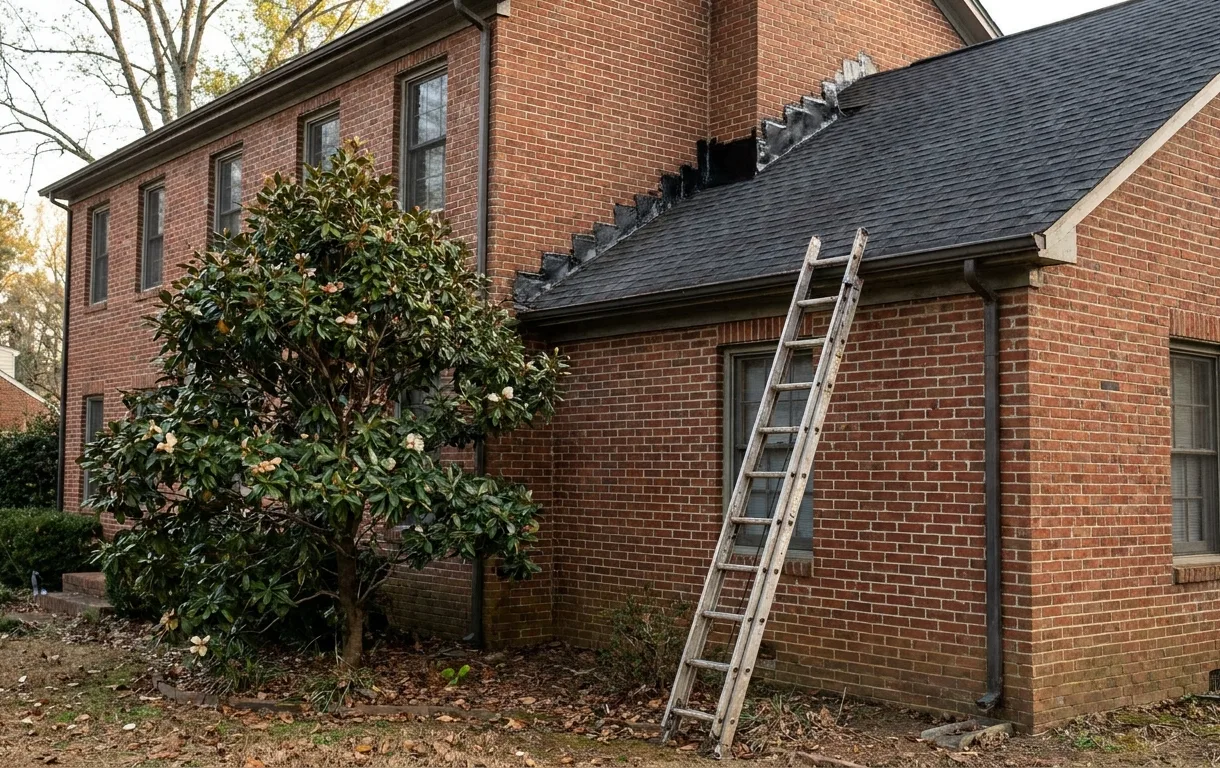
Roofing · the USA
Top Notch Matthews Roofing traces active roof leaks from interior water marks back to their roof entry points and performs targeted repairs on all roof types across the USA.
Our technicians follow stains along rafters and decking to locate the exact penetration allowing water to travel inward.
Each flashing, boot, seam, and vent is checked for separation, cracks, or sealant failure that directs water under shingles.
Only the damaged section or component is removed and replaced so the surrounding roof remains undisturbed.
Each service addresses a distinct roof penetration or damage type that commonly allows water to bypass the primary roof covering and reach the interior structure.
01Technicians lift affected shingles to inspect underlayment and decking for rot caused by prolonged moisture exposure. Missing granules and cracked tabs are replaced with matching material to restore the water-shedding plane.
 02
Counter flashing and step flashing are examined for gaps where roof planes meet walls. New pieces are woven into existing courses so water cannot migrate behind siding or into attic spaces.
 03
Seals around the curb and lens are tested for separation that allows water to pool and drip inside the frame. Failed gaskets are replaced and the flashing pan is resealed to the roof deck.
 04
Cricket and apron flashing are checked where the chimney interrupts the roof slope. Mortar joints and lead pans are renewed to prevent water from entering the masonry chase and attic.
 05
Blisters, splits, and ponding areas are cut open to expose wet insulation. New membrane patches are heat-welded to the existing surface to restore a continuous water barrier.
 06
Rubber boots around pipe penetrations are inspected for UV cracking. The boot is removed, the flange is cleaned, and a new boot is installed with compatible sealant at the base.
 07
Hail dents and wind-lifted shingles are documented by examining granule loss and creasing patterns. Impacted areas are isolated and repaired without disturbing intact sections.
 08
Every slope, penetration, and drainage point is walked to identify early signs of sealant failure or deck movement before water reaches interior surfaces.
Ceiling discoloration often appears first along joints where moisture travels horizontally across sheathing before dripping. Brown rings that widen after rain indicate ongoing entry rather than a one-time event. Attic insulation may also show matted areas or mold growth directly below the roof plane. Homeowners can place a bucket beneath any visible drip and note the exact location relative to exterior roof features such as chimneys or vents.
Move furniture and belongings away from the drip path to prevent secondary water damage. Place absorbent material or a shallow pan on the floor and monitor how much water collects during the next rainfall. Avoid climbing onto the roof or attempting temporary sealants from above until a technician arrives, as improper placement can force water into new areas of the decking.
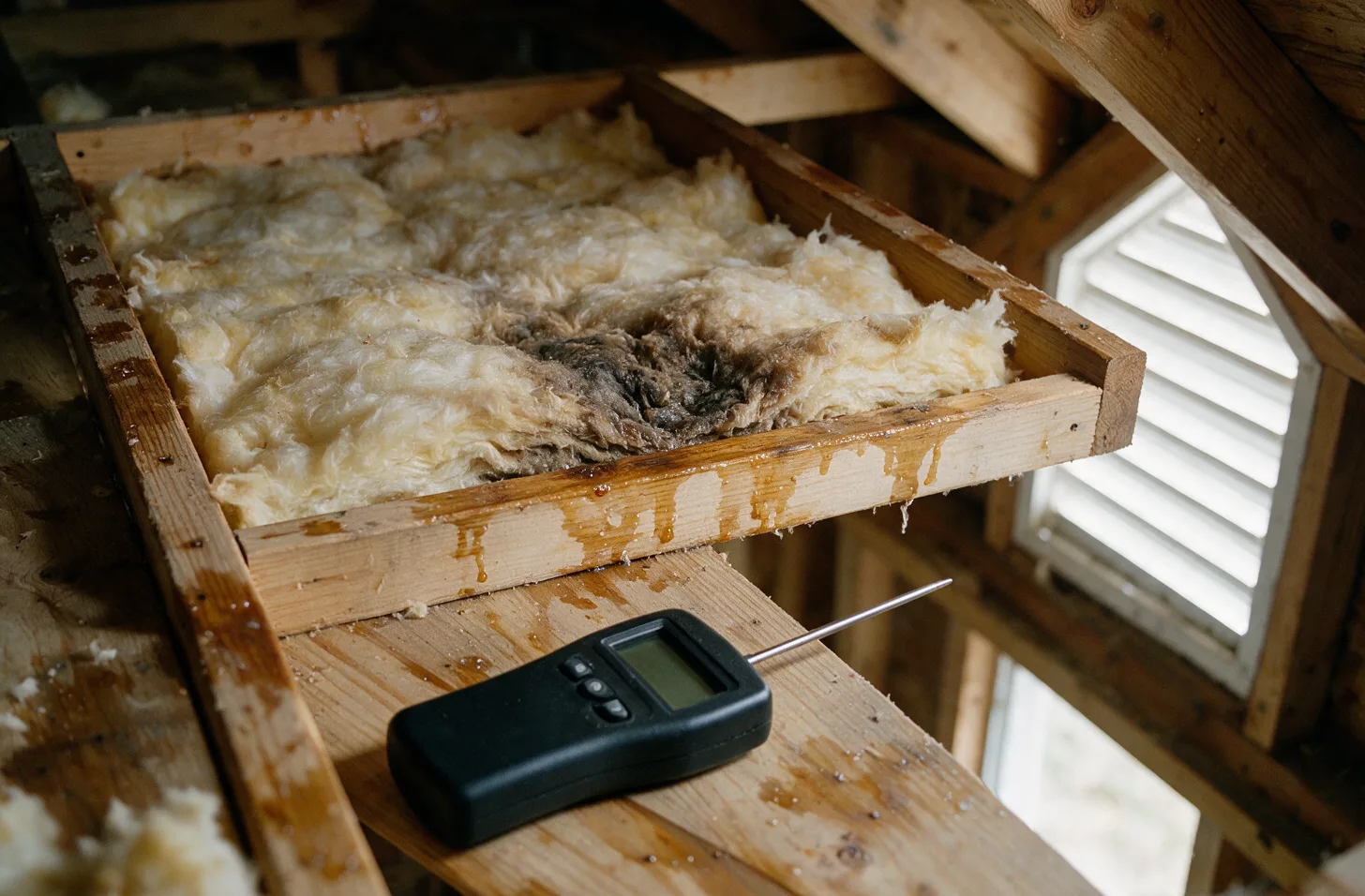
Top Notch Matthews Roofing follows a consistent sequence that begins with interior tracing and ends with exterior correction of the water entry point.
Stains are measured from walls and ceilings so the corresponding roof location can be identified without unnecessary removal of covering material.
Technicians examine flashing, vents, and seams directly above the mapped interior point, checking for lifted edges or failed sealant that directs water inward.
Only the failed element is replaced or resealed, then tested with water to confirm the path has been closed before any interior drying begins.
Photographs of the corrected penetration are taken and the attic is rechecked for residual moisture so the homeowner receives a complete record of the work.
Arrival begins with interior inspection of the stain location followed by attic access to trace water trails along rafters. Exterior examination starts at the suspected penetration and works outward, testing flashing seams and boot integrity with a moisture meter. Any wet decking is marked for repair so the source is addressed before interior finishes are restored.
Decisions rest on the extent of decking deterioration and the condition of surrounding roofing material. Isolated flashing or boot failure with sound decking allows a localized fix. Widespread granule loss, multiple penetration failures, or rotted sheathing across several slopes shifts the recommendation toward replacement of larger sections to maintain consistent drainage and wind resistance.
Cost is driven by the number of separate penetrations that require correction, the condition of the decking beneath the leak, and the roof slope and material type that must be temporarily removed for access. Multiple layers on older roofs increase labor because each layer must be cut back cleanly to reach sound substrate. Flat roof repairs often involve cutting out wet insulation and installing new tapered sections to restore drainage, which adds material and time compared with sloped shingle work.
Structures built before modern underlayment standards often have multiple layers that trap moisture between courses. Technicians remove only the minimum number of shingles needed to access the deck and install new underlayment at the repair zone. For rental properties the focus remains on documenting the entry point and completing the fix so interior occupancy can resume without repeated service calls.
Water follows the path of least resistance along rafters and underlayment before dripping. Our technicians start at the stain and work upward through the attic, marking every wet board until the exterior penetration is reached.
Interior sealant alone does not stop water that is already traveling under the roof covering. The source must be corrected on the exterior so the decking can dry and future entry is prevented.
The damaged section is cut out to solid wood and new plywood is installed before the roof covering is replaced. This restores structural support and prevents further sagging around the repair area.
Only the shingles directly above the failed flashing are lifted. The remaining slope stays in place so the repair stays limited to the water entry zone.
Skylights have a curb and lens assembly that creates additional seams. The flashing pan must be integrated with both the curb and the roof plane, whereas a vent boot seals only around a round pipe.
Localized repairs maintain the existing drainage paths and wind resistance of surrounding material. The work is confined to the identified failure so adjacent sections continue to perform as originally installed.
Contact Top Notch Matthews Roofing to trace and correct active roof leaks anywhere in the USA before water reaches interior finishes.